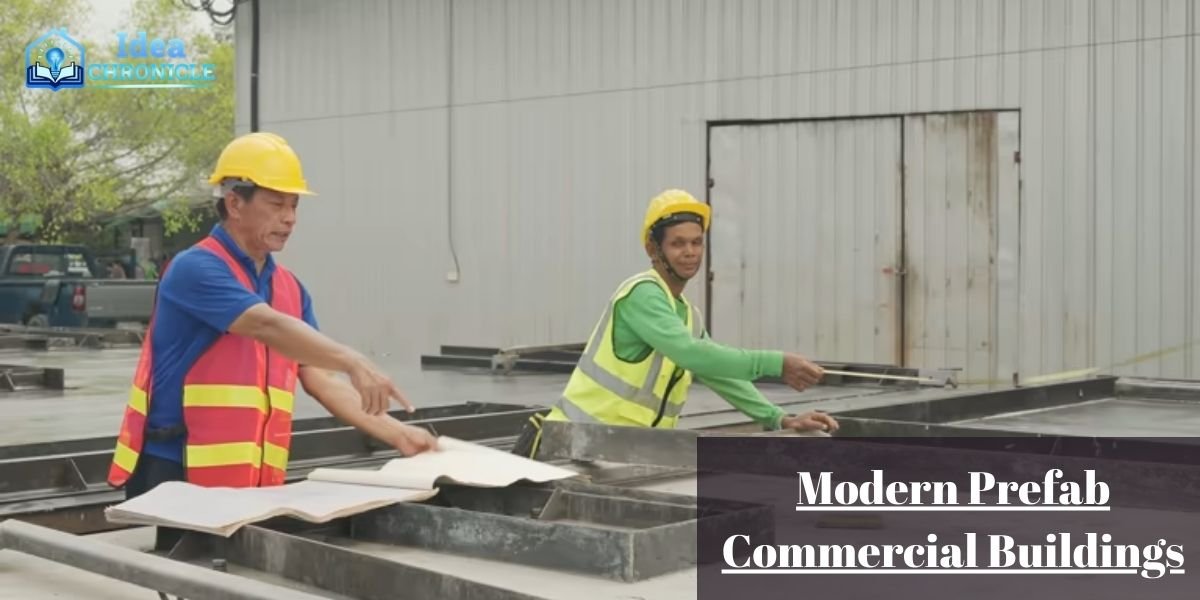
Modern commercial real estate is undergoing a massive shift as companies prioritize speed, cost predictability, and carbon footprint reduction. Modern prefab commercial buildings have evolved far beyond the temporary trailers of the past. Today, they feature high-performance steel frames, smart-glass facades, and architectural finishes that rival traditional stick-built projects.
By moving 80–90% of construction into a controlled factory, businesses can cut project timelines by up to 50%. This shift allows for faster occupancy and immediate revenue generation, which is a game-changer in a high-interest-rate environment.
What Are Modern Prefab Commercial Buildings?
These are permanent or relocatable structures composed of components manufactured off-site in a factory setting. Unlike traditional construction, where every stud and beam is cut and nailed on-site, a modular commercial building is built as a series of volumetric boxes (modules) or panels.
In my experience working with developers, the biggest misconception is that these are cheap alternatives. In reality, these structures meet or often exceed the same International Building Codes (IBC) as site-built properties.
Because they must survive the rigors of highway transportation and crane lifting, they are inherently more rigid and durable than buildings framed in mud.
How Prefabricated Commercial Buildings Are Designed and Built
The lifecycle of a prefab project is a masterpiece of parallel processing. Think of it like this: while your site crew is still clearing dirt, your building is already being framed in a dry, climate-controlled room miles away.
Planning, Engineering, and BIM Integration
The process starts with Building Information Modeling (BIM). We don’t just draw blueprints; we build a digital twin. This allows us to perform clash detection early. It ensures a plumbing pipe never competes for space with a structural beam, which is a common and expensive headache on traditional job sites.
Factory Manufacturing and Quality Control
Inside the factory, production moves along an assembly line. This environment eliminates the variables of rain, snow, and extreme heat that typically slow down crews.
Each module undergoes a rigorous quality checklist at every station. We ensure insulation is perfect and electrical connections are secure before the walls are even closed.
Site Preparation and Foundation Systems
The beauty of this method is that site work happens at the same time as factory work. While the building is being framed indoors, crews on-site install the concrete slab or pier foundation. This overlap can save you three to six months of total project time.
Transportation and On-Site Assembly
Once the site is ready, flatbed trucks deliver the modules. A crane then performs the “set,” lifting each unit into its final position. A small, specialized crew stitches the modules together, sealing the seams and connecting the pre-installed utilities.
Final Inspection and Commissioning
After the building is watertight, a third-party inspector verifies the site-level connections. The commissioning phase tests all systems, HVAC, fire suppression, and data, to ensure the building is ready for staff to move in immediately.
Types of Modern Prefab Commercial Buildings
Not all prefabs are the same. The method you choose depends entirely on your specific business needs and architectural vision.
- Modular Commercial Buildings: These are fully enclosed volumetric units with finished interiors. They are the go-to for offices, clinics, and hotels where speed is the top priority.
+1 - Pre-Engineered Steel Buildings: This method focuses on a structural steel skeleton. It allows for massive “clear spans” without interior columns, making it the gold standard for gyms and warehouses.
- Panelized Prefab Buildings: These consist of flat wall, floor, and roof panels. They offer more architectural freedom for unique shapes but require more labor to assemble on-site compared to modular units.
- Hybrid Structural Systems: This is a sophisticated approach that combines concrete or traditional steel cores with modular “pods” for bathrooms or specialized rooms.
Modular Office Building Solutions for Growing Businesses
For many companies I consult with, a modular office building represents the ultimate insurance policy against growth. Because these buildings are scalable, you can add new modules vertically or horizontally without shutting down your current operations.
Modern prefab office building designs now include “smart office” features like sensor-driven lighting and high-efficiency VRF heating systems. These systems don’t just save energy; they improve the actual comfort of the employees.
Materials Used in Modern Prefab Commercial Buildings
Material science in 2026 has pushed prefab into a new era of sustainability and strength.
- Structural Steel: Offers the highest strength-to-weight ratio, allowing for taller and safer structures.
- Insulated Metal Panels (IMPs): These provide a continuous insulation envelope, which can slash your heating and cooling bills by nearly 30%.
- Mass Timber: I love seeing this used more often. It’s an eco-friendly alternative to steel that sequesters carbon and creates a warm, biophilic interior.
- Self-Healing Concrete: Some advanced foundations now use concrete that seals its own micro-cracks over time, drastically reducing long-term maintenance costs.
Design Innovations in Modern Prefabricated Buildings
Innovation is moving away from “box-like” aesthetics toward high-performance architecture.
- Energy-Efficient and Net-Zero Ready: Many units come pre-wired for solar arrays and feature triple-pane argon-filled windows as a standard.
- IoT Integration: Real-time sensors monitor air quality and occupancy. If a conference room isn’t being used, the building stops wasting energy on it automatically.
- Acoustic Engineering: One of my favorite tech updates is specialized wall assemblies. In modular builds, the “double-wall” effect between modules offers superior soundproofing that you rarely get in traditional offices.
Cost Considerations for Modern Prefab Commercial Buildings
In 2026, the industry has shifted toward a Total Cost of Ownership model. You have to look past the sticker price.
The Realistic Price Per Square Foot
Across the US, finished projects typically range from:
- Warehouses: $240 – $350 per sq. ft.
- Standard Offices: $450 – $650 per sq. ft.
- Medical/Labs: $700 – $1,000+ per sq. ft.
Hard Costs vs. Soft Costs
Hard costs (physical modules and foundation) represent 70% to 80% of your budget. Soft costs include BIM design fees, permits, and Builder’s Risk insurance, which is now mandatory for nearly 90% of modular projects.
Logistics: The “Hidden” Cost
Logistics is a massive budget driver. Transportation can cost anywhere from $3,000 to $8,000 per module depending on the distance. Crane rentals are another big factor, often averaging $2,000 to $10,000 per day. My advice? Always have your site prep and utility trenching done before the trucks arrive to avoid paying for a crane to sit idle.
| Cost Category | Prefab Savings | The Expert “Why” |
| Labor | 20-30% | Factory crews are specialized and don’t fight weather. |
| Material Waste | 40% | Factories use precision cutting; leftover steel is recycled. |
| Financing | Significant | You stop paying construction interest months earlier. |
Building Codes, Compliance, and Regulatory Requirements
Every prefabricated building must comply with state and local regulations. In the USA, most states utilize an Industrialized Housing & Buildings Program.
For example, Pennsylvania is adopting 2021 Codes effective June 2026. This is actually a benefit for you. It means the state inspects the building in the factory and provides a certification label. This limits the local official’s role to only checking site work and foundations, which often removes the red tape that usually slows down a project.
The Future of Modern Prefab Commercial Buildings
As we look deeper into 2026, we are seeing the rise of 3D-printed components and robotic assembly. This allows for customized, curved facades that were once architectural dreams because they were too expensive.
With the current global labor shortage, choosing modern prefab commercial buildings isn’t just an option, it’s becoming the default for smart investors.
FAQ: Expert Perspective
How long do modern prefab commercial buildings last?
Treat them well, and they’ll last 50+ years. They are structurally identical to (and often stronger than) site-built projects.
Are they actually cheaper?
Square foot for square foot, the price is comparable. However, the 15–20% savings in “total project cost” comes from the months of time you save. Time is money in real estate.
Can I get a standard mortgage?
Yes. As long as it’s on a permanent foundation, most commercial lenders see no difference between a prefab and a traditional building.
What is the environmental impact?
It’s massive. You generate up to 90% less waste on-site, and the tight construction tolerances make achieving LEED certification much easier.