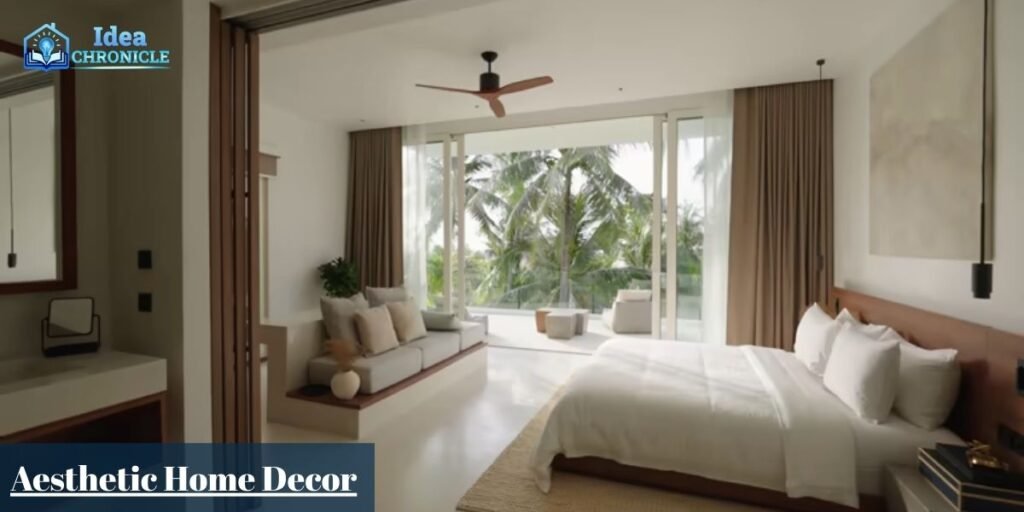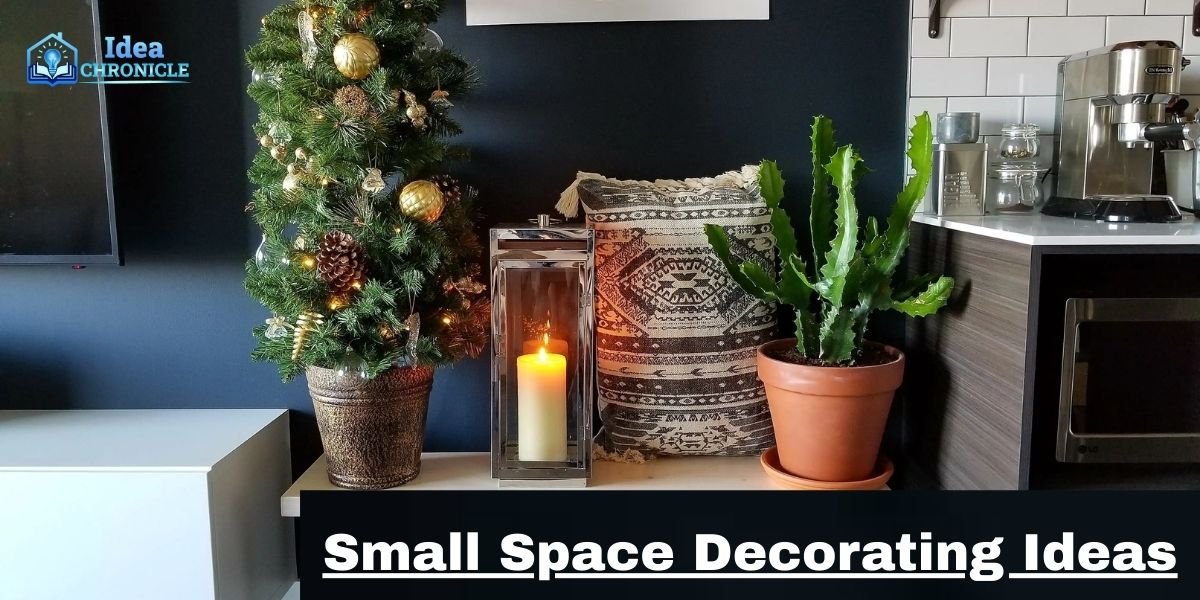
A large space isn’t about floor, and style is a way to say who you are without speaking. Living in small places is a continuous process of editing, like you add what you love, and always seeking tricks to keep things with purpose!
Small rooms and tight places can be cozy until you start closing yourself in them. The clutter, whether it’s visual or in the form of dark surfaces, leaves no space for breath.
Bulky furniture with unintentional decor settings and swollen lights are the major causes of making a room suffocating. Small rooms and spaces are more confining than they actually are.
The problem is not about the square footage; it’s about elements inside a space that need to be paid attention to.
Do you know what’s good idea is here? You don’t need to reconstruct or rebuild your rooms to make them airy and cozy. With a few smart and clever decorating strategies, you can instantly create a cozy and better space.
Adding proper light with multifunctional furniture and choosing the right colors are smart solutions. The tricks and ideas are simple and affordable.
A few tweaks, from placing mirrors to adding lighter curtains at height, can make your tiniest room into something larger and brighter.
| Table of Contents 1- Skip the Dark Colors 2- Use mirrors as a secret weapon 3- Use double-duty furniture4- Define your zones 5- Opt for symmetric patterns 6- Clear clutter 7- Choose the Right Furniture 8- Use Airy curtains at height 9- Let the Natural light in 10- Keep the decor simple and intentional Retreat to your small space with big ideas! |
1- Skip The Dark Colors
Dark colors result in soaking up light and make the smaller space feel more closed and confined. Lighter shades in contrast reflect natural light and make a small and crowded room airy and open.
White shades and greyish hues are perfect colors to add to a small room. You can also add soft fabrics with warm shades rather than dark ones to feel the difference
- Cling with a neutral and solid color palette to create a coherent flow.
- Paint the stained areas and ceilings a lighter shade to blur boundaries.
- Add pop-up color through cushions or art, not on walls.
Lighter colors in smaller spaces work as a breathable element.
| 📍Pro Tip: Before applying color to the whole home or room, always test the samples on different areas under different lighting |
2- Use Mirrors As A Secret Weapon
Mirrors are a widely used secret weapon to double your space as they reflect light and visually increase the views.
A large mirror on the wall or a mirrored cabinet bounces brightness around the room. Mirrors increase the depth and add openness to the room.
- Mirrors placed across from windows allow natural light.
- Mirrored cabinets and wardrobes are used for subtle reflection
- Create a gallery wall of mismatched mirrored frames for charm.
A mirror adds dimension and story; it lets your room breathe beyond its walls.
| 📍Pro Tip: Position mirrors to reflect something beautiful, like a plant or piece of art, for the best effect. |
3- Use Double-Duty Furniture
Multifunctional furniture does more than one job and helps your small room to feel open and flexible. A single piece can fulfill two to three motives and bring down the clutter easily.
For instance, a daybed can provide both a bed and a sofa for guests. Limited pieces on the floor add more space and easier to walk through.
- A storage couch enlarged as a coffee table and seating.
- Hanging tables and desks create a workspace without bulk.
- Sofa beds remodel living rooms into guest spaces.
Every inch counts; make your furniture earn its place.
| 📍Pro Tip: Pick out furniture with clean lines and light legs to maintain visual openness. |
4- Define Your Zones
Clear zones in small apartments make the space organized and spacious. Placing rugs with soft textures and furniture placement in separate areas adds visual clearance.
- A small rug can define a seating corner or reading nook.
- Pendant lights over dining tables subtly mark boundaries.
- Open shelving creates layout separation without walls.
Zoning gives structure to even the smallest of spaces; it’s the invisible architecture of comfort.
| 📍Pro Tip: Use consistent colors across zones so the transitions feel smooth. |
5- Opt For Symmetric Patterns
Symmetry offers balance, which visually calms small spaces. Repeating elements like twin lamps or geometric rugs create a sense of order.
- Use matching artwork or identical pillow arrangements.
- Set your furniture symmetrically for visual balance.
- Choose and add subtle patterns that feel calm instead of overwhelming.
Symmetry brings rhythm, the soothing geometry of a balanced home.
| 📍Pro Tip: Keep symmetry slight and relaxed for differences in texture prevent the look from feeling stiff. |
6- Clear Clutter
Minimalism adds an expensive and luxurious touch to tiny spaces. Clutter is an enemy of a clean surface, and selective styling adds serenity.
- For close-mounted storage, use built-in cabinets. Baskets and storage bins keep the clutter hidden.
- Add a few statement pieces instead of many small knick-knacks.
- Keep countertops of kitchens and bathrooms clear.
A decluttered room gives space for both the body and the mind.
| 📍Pro Tip: Follow the “one in, one out” rule: If you add one new item than remove one as well. |
7- Choose The Right Furniture
Massive furniture is in a close-packed space. Choose symmetric and balanced pieces that add air between room items.
- Select chairs without arms and glass tables for luminosity.
- Use hanging shelves instead of huge bookcases.
- opt for slim furniture with raised-leg designs to show more floor area.
Scale is everything, big comfort can come in small, smart silhouettes.
| 📍Pro Tip: Instead of selecting too many small pieces, stick to a few larger pieces. |
8- Use Airy Curtains At Height
Tall and see-through curtains make your ceiling higher, and the room feels airy. Hanging curtains closed to your ceiling adds elegance and enlarges the walls
- Hang your curtain rod 4–6 inches upward the window frame.
- Opt for the lighter fabrics, such as linen and net.
- Use curtains according to the walls to add height.
Raise your hangings, and your insights into space lifts with them.
| 📍Pro Tip: Enlarge curtains wider than the window frame to make windows appear expanded. |
9- Let The Natural Light In
Natural light multiplies the room width. Your room will feel stretched visually. The more sunlight enters your room, the brighter and inclusive the impact it adds.
- Cut out your grown plants, so they let that natural light can come to your room
- Transparent blinds allow the natural light in; try to avoid dark shades.
- Mirrors in rooms add brightening finishes.
Sunlight is the designer’s magic wand; it paints space into existence.
| 📍Pro Tip: Keep windows spotless, clean glass boosts light penetration! |
10- Keep The Decor Simple And Intentional
Over-decorating can make compact rooms feel busy. Instead, curate meaningful pieces and let negative space work for you.
- One focal point in a room is enough. An accent wall with unique art can add a new vibe to your room
- Instead of choosing too many colors, go for a two to three-color shade for smooth touches.
- Go for decor that expresses a cohesive story.
A planned design is not about less or more; it’s about designing a room with everything that matters.
| 📍Pro Tip: Edit fiercely; if something doesn’t have a function, it doesn’t belong. |
Retreat To Your Small Space With Big Ideas!
The square footage of your home doesn’t create illusion; the smart and careful choices do. These smart home ideas let you choose a thematic color with lighter shades; these airy paint colors make the small space more breathable.
The mirrors you place in your room add depth. The use of multifunctional furniture adds the element of decoration, without spending on decoration. Decluttering should be one of the main focuses in smaller spaces.
You can start with 2-3 small tweaks at the start. You can simply reposition your mirror and raise the curtain rods. You’ll be amazed by how such small changes can transform your room so easily.